
Diego Maradona's burial took place on November 26, 2020, in a private ceremony at the Jardín de Paz cemetery in Bella Vista, on the outskirts of Buenos Aires. The location, chosen by his family, sits roughly 30 miles from the humble Villa Fiorito where he was born. It is a gated garden cemetery with manicured lawns and marble mausoleums—a stark contrast to the chaotic, vibrant world Maradona inhabited. I remember watching the live feed of the funeral procession: a white van carrying his casket。flanked by police, moving through streets lined with mourners who threw flowers and chanted his name. The burial itself was closed to the public, a decision that sparked both relief and fury. Relief, because the family feared the crowds would turn the cemetery into a circus. Fury, because millions of Argentines felt they had been denied a collective goodbye.
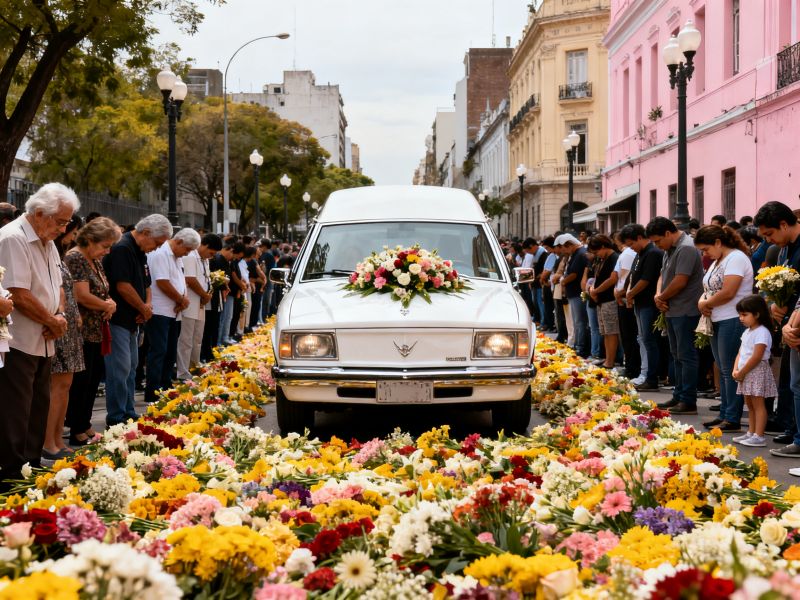
The controversy surrounding Maradona's burial began almost immediately. His grave is not marked with a grand monument;instead, it lies beneath a simple marble slab in a family plot. Some fans have called this an insult to a man who was treated as a deity. Others argue that the modesty is fitting—Maradona himself was never one for quiet, but his family insisted on privacy. I visited the cemetery in early 2021. A security guard told me that on an average day, dozens of people arrive, some weeping。some leaving cigarettes or small bottles of wine. They are not allowed inside the gates, so they stand at the fence and peer through the bars. It is a strange pilgrimage: a burial site that is both sacred and inaccessible. The guard said, “They come from all over. Once, a man from Naples flew in just to touch the wall” That wall is now covered in graffiti—Diego's face, the number 10, messages in Spanish and Italian.Legal disputes have also shadowed Maradona's burial. His remains were interred before a paternity case could be resolved—several individuals claiming to be his children demanded DNA tests. The decision to bury him quickly, without waiting for those claims, angered some. A lawyer representing one claimant told a local radio station that the burial was “a race to seal the tomb” The family's response was blunt: they wanted to end the media spectacle. I find it hard to blame them. Maradona's life was a public possession;his death, they argued, should belong to those who loved him privately. Yet the burial site itself has become a public symbol. In 2021, a proposal to move his remains to a mausoleum in Villa Fiorito—a project backed by a fan group—was rejected by a judge. The judge cited the family's wishes and the risk of turning the grave into a tourist attraction. That rejection, in my view, was correct. A mausoleum would have felt like a theme park. The cemetery, for all its restrictions。retains a strange dignity.What strikes me most about Maradona's burial is how it mirrors his life: surrounded by adoration, conflict, and a stubborn refusal to follow convention. The Jardín de Paz is not a shrine. It is a working cemetery where other families bury their dead. On weekends。you can hear lawnmowers and distant traffic. That ordinariness is, perhaps, the most radical thing about it. A man who drew 300,000 people to his funeral procession now lies in a plot that his fans can only glimpse from a distance. I asked the guard if he thought Maradona would have liked it. He shrugged. “Who knows?
He liked noise. But maybe now he needs quiet” That answer has stayed with me. Maradona's burial is not a resolution;it is an uneasy peace. The grave is there, the arguments continue, and the fence keeps the world at bay—just barely.