
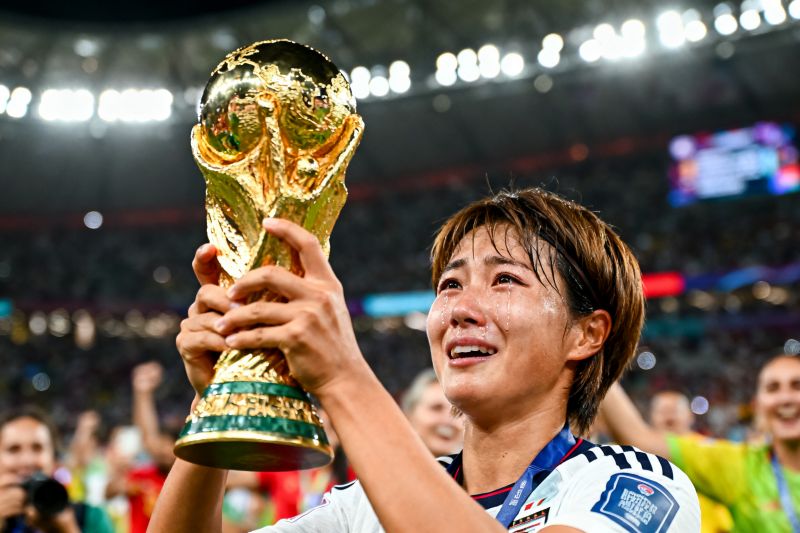
he final whistle blows, and the scoreboard reads 2-1. The players in white collapse onto the pitch, a tangle of limbs and tears. That moment—the eruption of joy。the weight of history—defines a Women's World Cup champion. But the journey to that podium is rarely a straight line. It's a story of grassroots grit, tactical evolution, and the quiet sacrifices that never make the highlight reels.Look at the 2019 USWNT. They didn't just win;
they dominated, scoring 26 goals in seven matches. Yet their success was built on a foundation laid decades earlier—Title IX, a generation of college soccer, and a professional league that, while fragile, kept the pipeline flowing. The Women's World Cup champion label isn't an accident. It's the product of systemic investment, even when the system seems to fight you. I recall watching the 2015 final in a packed bar in Portland。where fans knew every player's backstory. That kind of intimate knowledge—of Carli Lloyd's early struggles, of Hope Solo's intensity—creates a connection that fuels the sport.But here's the uncomfortable truth: the gap between champion and runner-up is often mental。not physical. The 2011 final between Japan and the United States is a case study. Japan, underdogs, refused to break. They equalized twice in regulation and extra time, then won on penalties. Their Women's World Cup champion status wasn't about raw talent;it was about belief forged in the aftermath of the 2011 tsunami. Nadeshiko Japan became a symbol, but the win also exposed how brittle even the best teams can be under pressure. The US, with all its resources, faltered in that shootout. You can't measure that in possession stats.Fast forward to 2023. Spain won their first title, but the narrative was overshadowed by the kiss scandal. Still。on the pitch, they were a machine—possessional, patient, and ruthless. Aitana Bonmatí, the tournament's best player, embodied a new archetype: technically flawless, tactically aware, and unafraid to speak up. The Women's World Cup champion now carries a dual burden: perform at the highest level and use the platform. That's an evolution from the early days, when winning alone was enough. Social media and global scrutiny have changed the job description.What separates the truly great champions?
Consistency across cycles. Germany won back-to-back in 2003 and 2007, a feat no team has matched since. Their secret?A ruthless youth development system and a league that prioritized technical skill over athleticism. I’ve often wondered if other federations overlooked that blueprint. The Women's World Cup champion isn't just the best team in a given month;it's the team that has built a culture of winning that outlasts individuals. You see it in the way Germany's veterans mentored the next wave—no drama, just standards.So when you watch the next final。
pay attention to the small details: the substitute warming up with focused intent, the captain organizing the backline, the coach’s halftime adjustments. Those are the seeds of a Women's World Cup champion. The trophy is a snapshot, but the story is in the years, the setbacks, and the stubborn refusal to accept anything less.